www.rockcellarmagazine.com
Giles Martin Reflects on the 50th Anniversary Remix of the Beatles’ ‘Sgt. Pepper’s Lonely Hearts Club Band’
Written by: Ken Sharp
ROCKCELLAR MAGAZINE
 C A Management / RecordProduction.com
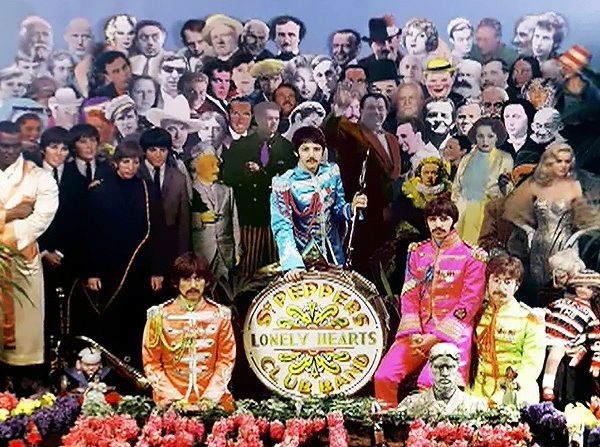
50 years ago (today, in fact), Sgt. Pepper taught the band to play with the release of the Beatles’ iconic album, Sgt. Pepper’s Lonely Hearts Club Band. Through the ensuing decades, music critics and fans around the globe have routinely cited the record rock’s most seminal and groundbreaking long-player.
In celebration of the 50th anniversary release of Sgt. Pepper, the motherlode of Beatles releases has hit shops and digital platforms, available in three different configurations: a 2-CD deluxe edition of Sgt. Pepper, 2-LP deluxe edition of Sgt. Pepper and Super Deluxe 6-CD Sgt. Pepper box set, each boasting a new stereo remix of the album and bounty of extras including revelatory session outtakes; the Super Deluxe 6-CD set also includes a lavish book, two posters, Blu-Ray with surround-sound audio mixes, and DVD culling promo clips and the 1992 documentary The Making Of Sgt. Pepper, which chronicles the creation of this legendary album showcasing interviews with Paul McCartney, George Harrison, Ringo Starr and producer George Martin among others.
Overseeing this historic project is Giles Martin, son of the Beatles’ late producer, George Martin. Giles, who has worked on previous Beatles projects, notably Love and the Eight Days A Week film, lent his passion, creativity and expertise to the project. He worked tirelessly to both honor its original sonic imprint and also, by employing today’s technology, he was able to lend measured audio modernization to the original 1967 album.
Following an intimate private listening party for selected LA based press in Studio A at Capitol Records, we sat down with Giles in the studio’s control room as he guided us through the creative decisions and process behind this landmark project.

Rock Cellar: John Lennon once said, “If you haven’t heard Sgt. Pepper in mono, you haven’t heard Sgt. Pepper.” Discuss how the original mono mix circa 1967 was used as the road map for the new stereo remix of Sgt. Pepper.
Giles Martin: There was always a conflict between America and the UK with the Beatles anyway. Capitol Records often took the tapes that my father and the engineers had made and changed them. When it came to Sgt. Pepper, the band, my dad and Geoff Emerick, their engineer, spent a long time mixing the album in mono. They mixed the monos because that was how the album was meant to be and that was how Sgt. Pepper was released in the UK and the stereo mix was done afterwards. Stereo was a new thing and it wasn’t one of those things in the UK that was big. It was kind of like a gimmick so a lot of the techniques that were applied to the final album mix weren’t relevant to the stereo mix.
So the ADT, artificial double-tracking of John’s voice on “A Day In The Life,” the vari-speed on “Lovely Rita” and “She’s Leaving Home” were both a different tempo. With “She’s Leaving Home,” the mono version was stark and it was a semi-tone higher so there was a completely different feel to it. That kind of validated the procedure of what we were doing in a funny way. Also, we had a template for what The Beatles wanted.
Sadly, my dad is not around anymore and I miss him and sadly, the Beatles weren’t around to mix the record with us so basically I’m a usurper. But we could use the mono mix as our guide. There’s a lot of people who haven’t heard Sgt. Pepper and there will be as time goes on and you want people to be able to listen to it and go, ‘Ah, this is just great!”
Now I can understand why my parents or grandparents say this is the most important album ever.
So if you play them the mono they’re not gonna get it from that because people’s listening habits have changed; speakers have changed over 50 years for God’s sake. So that was our intent and we had that template we wanted to work from.

You had major trepidations about remixing Sgt. Pepper.
Giles Martin: In truth, there was some trepidation because you’re worried about screwing it up (laughs). This record is really important to people. Since the Love project there’s been request to remix Beatles stuff and I’ve always said, “No, why? Why would you want to do it? The records sound great.” Then when we did the Beatles 1 record, people asked, “are you going to remix the songs?” and I said, “No” but then I was told I needed to prepare mixes in 5.1 so I had to remix it. I didn’t want to do some faux and crappy 5.1 mixes. In the pathways of the 5.1’s we remixed the stereos because that’s what you do and people liked it. I didn’t think they were gonna release a CD of it; that wasn’t part of the plan.
Fans, the people who really care about this stuff, really liked it and that gave me of confidence when working on Sgt. Pepper project. I thought, “Okay, if people like this then I have goodwill behind me.” I knew I had the goodwill of the Beatles because otherwise they wouldn’t be doing it so that enabled me to push things as much as possible. I sat down with Sam Okell, who I work with and said, “we need to push this, we’re not doing a legacy product here.”
This is important; it’s all about people hearing the record for the first time, whether they’ve heard the record for the last 50 years or they’ve heard the record for the first time. I remember playing it to Bob Clearmountain, a legendary mixing engineer, when I was in L.A. working on it and he went, “Oh god, I feel like crying. I feel like I’m hearing the record for the first time.” And I went, “That’s the plan!”
In speaking about the Sgt. Pepper project, you said, “In a way, the record was sort of trapped in a box of its own time.”
Giles Martin: My dad started working at Abbey Road and the artistic intent was to create a correct facsimile of a recording. So how do we get to that stage so someone’s singing sounds like someone singing in the home? So with this project we’re working from the original tapes; the tape sounds like the Beatles are in the room.
That’s why they could have that Instagram filter-based way of screwing things up and sort of painting pictures with sound. Picasso learned how to draw perfectly before he did cubist drawings; it’s the same process, and recording is the same. So for that reason, recordings are a time capsule of the band at that age. I think Paul McCartney was 25 or 26 when he was working on Sgt. Pepper and he’ll always be that age on Sgt. Pepper so time goes on but that’s what I mean by the capsule…so therefore it should sound like that. It should sound like it’s fresh because it is fresh. The tapes are fresh and the mixes are fresh; it shouldn’t sound old.
The process of remastering, the final mix tapes have been played loads of times but the tapes we mix off haven’t been played loads of times. So that’s what I love about this. Recording is time travel and you can go back to the day that someone’s in the studio and that’s I think what people hear. People react not to technology, they react to visceral human input and that‘s what we went for with this.
The remix of “She’s Leaving Home” really hit me hard on an emotional level.
Giles Martin: That’s nice to hear. Before I was involved with Beatles stuff I remember being in my apartment and listening to “For No One” from Revolver and they did a surround sound for that one but the French horn was out of tune. I didn’t notice it before. The thing about The Beatles’ Sgt. Pepper album is you open it up and generally it’s like exploratory surgery but the patient is in really good health. All the playing and the parts are really good.
With “She’s Leaving Home,” I was worried when we split the vocals that you’d hear the fragility of the tuning of the vocals but actually you suddenly realize that’s what touches you. We live in a perfect world of tuning now and it’s so difficult to sing the part John and Paul laid down on “For No One.” Paul and John sang around a microphone together twice. The fact that it’s like, “are they gonna get the note?” The fact that it’s a performance touches you more.

It’s flawed perfection.
Giles Martin: Yeah, exactly, which is what perfection is in a funny way.
What tracks proved trickiest in terms of remixing?
Giles Martin: The trickiest songs to work on are the ones that haven’t been bounced. So what I mean by that is the Beatles recorded on four-track and then they’d bounce that to another four-track so we were able to go back to earlier generations. So something like “Sgt. Pepper (Reprise)” is the four-track; we’re mixing off the same four-track they were mixing off where in other cases we’re mixing off four-tracks that they never mixed off. So we’re mixing of tapes that are much fresher so immediately we have a head start. But with something like “Sgt. Pepper (Reprise)” we didn’t have a head start but what we do is use new techniques and we can ADT, artificial double-track, things like the chorus vocals so they’re stereo now where they weren’t stereo before.
We can do what the Beatles would have done using the same technology they had but we can now have more tracks so we can do a better mix.
You’ve used the word “immersive” when describing this project, can you elaborate?
Giles Martin: Well, when I listen to the mono versions of something like “A Day In the Life” it feels like you fall into the speaker. You feel there’s more to it than just a single signal. And that’s what we’re trying to achieve with this, that’s the goal of this project. The thing about Sgt. Pepper is it’s remarkable as an album because it changes so much. The recordings are fairly straightforward; it’s the band performing in the studio and the different takes are the variations. It’s like a perfect tasting menu; what follows each course is extraordinary.
For instance, on “Getting Better” we ADT’ed the tambouras. There’s a breakdown in “Getting Better” and the tambouras come in and now they’re not coming out of one speaker but two speakers and there’s a swirl to them that you feel like you’re falling into the middle of, which I think is pretty cool and I think it’s what The Beatles wanted to do, they would have done that. Then when Paul’s bass comes in and Ringo’s drums, it focuses you again and there’s that change. It’s all about surprises and that’s what the Beatles were full of.
Speaking of surprises, when going through the sessions tapes and culling bonus material, what were the biggest surprises you uncovered?
Giles Martin: There were a lot of gems. There’s not as much speech as I would have liked because the Beatles were so efficient with their recording they didn’t really hang around the studio. Sgt. Pepper is looked upon as their most complicated album but it really isn’t compared to modern day albums, they didn’t do that many takes. “Fixing a Hole” was done in three takes, for instance. The orchestral part on “She’s Leaving Home” was done in six takes but they used take one. Even with “Fixing a Hole” they used take one. The biggest surprises were things I put on this set like George speaking to one of the players on “Within You, Without You” about the part he’s playing and explaining what he wanted him to play.
The hum session from “A Day In the Life” is another one. The Beatles originally planned on it being a big chorus hum that to finish the piano chord on the song so I put the whole session of that one this set. We remixed “Penny Lane” and “Strawberry Fields” for this as well. There’s a backing clap track from “Penny Lane” where Paul is explaining to George while they’re doing the claps how he wants the trumpet to sound and singing the parts to him and you realize they really knew what they wanted to do.
The Beatles were really efficient in the studio. I think the beauty of this album is it was really the climax. The Beatles made great albums throughout their career but this album is the peak of the four of them collaborating. It was certainly my dad’s happiest experience working with the Beatles. They all were pulling in the same direction for this. They were all actually pushing away from Beatlemania and the girl fans that they had wanted to do something more sophisticated. So just hearing the construction of that on the tapes was just amazing.

Listening to the remix, I was struck by how avant-garde the album is in various places. In ’64 they’re recording “A Hard Days Night” and two years later, they’re cutting “A Day In the Life.”
Giles Martin: Yeah. Or you think about George recording “Within You, Without You” at the age of 24. He’s a guy from Liverpool who didn’t even have a toilet in his house. How do you go to India and create “Within You, Without You”?
It’s just the a variation from that to “When I’m Sixty-Four.”
Giles Martin: You always wonder what will it be like when you’re sixty-four but it makes sense because it pulls you out of that world into another world and when “Lovely Rita” comes in with the new mix it’s so wide with the vocals and it’s a refresher to the next thing. I think the album is odd. If you think about the context of this album, there’s no other album like that, no other album with such extreme variation that isn’t pretentious, everything is a pop song. Sgt. Pepper is an exploration in pop music in a way I guess triggered by things like “Good Vibrations” and what Brian Wilson was doing and a bunch of other things. It’s taking on so many influences.
Sgt. Pepper is just a strange album because it’s so brave.
Was there any consideration for the experimental unreleased track, “Carnival of Light”?
Giles Martin: No. It was never considered for the project. It was never considered for a record release at the time anyway.
Having heard it, do you consider it worthy of release at some point?
Giles Martin: There’s an artistic quality to it because it’s the Beatles and it’s interesting but it was designed for an experience; it was almost a commission for an art piece. One day it would be nice to do something like that with but it’s not “Penny Lane”; it’s closer to “Revolution Number 9.” So if fans are expecting as song like “Strawberry Fields” or “Penny Lane,” you’re not gonna get it because it is by its nature designed for this sort of weird kind of immersive world and that’s the world we should go into with it.
 C A Management / Tim Huffman
Was there any thought to have included “Only A Northern Song” on this set?
Giles Martin: There was, yeah. There was some disagreement over whether it was rejected for the album or not. If that was the case I didn’t want to celebrate that it was rejected for the album because I think it’s a pretty good song. I said this to George’s wife, Olivia. “Why should we celebrate the fact that it was thrown off the album by making it an extra?”
We have so much material, I could barely get the extras onto two albums. The Beatles were so precise and concise with what they did and I think we have to treat this in the same way. This is about Sgt. Pepper’s Lonely Hearts Club Band and I think everyone would agree, my father especially, that “Strawberry Fields” and “Penny Lane” were a part of that legacy. So that’s what we’ve kept it to and there’s not too much confusion. Even the elements that aren’t songs but are on the extras are things that are from the songs so the piano take from “A Day In The Life,” the whole nine takes of that session are on it.
For me, it’s all about building a record. There’s no point with putting “Only A Northern Song” on there because it’s not on the record, if that makes sense. But of course we considered everything. We consider whether we should put “Strawberry Fields” and “Penny Lane” on the album. I talked to Paul about it and he went, “Well, where would you put them?” You can’t put them at the beginning ‘cause the album starts with the audience as the beginning of a piece and you can’t put them at the end. So do you put them on side one? Then it’s like, why? We are already remixing the album and people might get angry with me for that. I think we made the right decision and I think we made the right decision on Record Store Day to do the vinyl.
This is an exclusive; it’s quite funny. I wasn’t even in a meeting about that but they were talking about it in a meeting that I was in and I went, “what are you talking about? And they said, “We’re putting out the “Penny Lane”/”Strawberry Fields” single for Record Store Day.” So I said, “Why don’t you do the new mixes? Why are you doing the original monos?” They said, “Well, we need to get it done now.” So I phoned up Miles, who was the mastering engineer who cuts the vinyl for me, and he was doing something else. I said, “Can you do a cut?” And he said, “Well, when do you need it done by?” And I said, “45 minutes.” So he did it and then it came out. That’s how it should be. That’s proper old style so I think we did the right thing.
You ran the mixes by Paul, what impressed him especially?
Giles Martin: Well, he was there when they played it. I think it took him back to the recording of the album as opposed to the mixing of it, if that makes sense, because he could hear everything there. Paul is driven, he’s passionate but he has a great memory for everything. He has a great memory for music so he knows what’s there and he knows what he played and what John played and what George and Ringo played and remembers doing it. But I think for him it triggers that memory. This is an homage to their creativity, not to me mixing.
It’s not about that and it’s not about hearing stuff you’ve never heard before. Last night I played the album to some people and one person said, “What’s great about this is I can really hear the drums” and then another guy came up to me and said, “What I really like about this mix is the way the guitars sound” and then another one said, “I love the fact that I can really hear Paul’s bass.” Jeff Jones, who is the head of Apple, said “the thing about these mixes is you can hear the backing vocals really well.”
Okay, we’re probably doing a pretty good job if that’s the case (laughs) ‘cause that’s what it is. It’s pulling back the layers. What’s beautiful about the Beatles is the support mechanism. There’s so much written about bad stuff but I played “Within You, Without You” and Paul goes, “You know that’s George playing the sitar solo. That’s him.” He said it with such pride because the music was so complex. My father always said that George was a tapestry guy making a carpet, very particular about each and every thread. And it’s that appreciation of everyone’s talents that they had. I think Sgt. Pepper’s Lonely Hearts Club Band was the culmination of the four of them all working together.
So I sat down and listened to the whole album with Paul and he believes the same thing as I do; it’s not a technical question, it’s a question of how does this album make you feel? There have been remix projects done with bands where they take the songs and they try and change them. I think people will listen to this and think, “That’s ‘Sgt. Pepper’s Lonely Hearts Club Band’ by The Beatles.” Hopefully it’s only when they flip back to the record that they knew where they’ll go, oh, now I get what they were doing.
For us, it’s all about, how is the music you remembered? It’s never quite the same thing. It’s like looking a photograph of your wife, your loved one and going, “God, that was us then? God, we were actually quite attractive or quite dynamic.” (laughs) Do you know what I mean?
Paul gets that. He sat and listened and afterward he said to me, “God, we were a pretty good band, weren’t we?”
But that’s right, with this new mix you can hear how good they were as a band. We got to “Fixing a Hole” and he told me the story of how someone came to his door and told him his name was Jesus. (laughs) Paul said that he told him he was running out the door and off the studio and asked him if he wanted to come. So he took him down to the studio and went, “Hey lads, this is Jesus.” And they said, “Hello Jesus.” (laughs) He told me this was for the session they did for “Fixing A Hole,” which was recorded outside of Abbey Road at a place called Regent Sound. It’s the free spirit nature of “This guy is called Jesus” and he sat in the sessions. It’s just that easygoing thing. They were sitting on top of the world and just had the confidence to do whatever they wanted and doing the right thing.
Ringo’s drumming shines on the remix.
Giles Martin: I sent Ringo the remixes but wasn’t with him when he listened. He’s been such a great supporter. He stood up on the stage of the premiere of Eight Days A Week and said, “I just want to say thank you to Giles and his team.” It was deeply humbling for me. Both Paul and Ringo know I do this for them, not me. I do this because they are so great. In terms of the drumming, it’s also a tribute to the band’s engineer, Geoff Emerick, because the sound of the drums on this album is just crazy. The drum sound, for instance, on “With A Little Help From My Friends”’ is just amazing. The snare drum sound on “Lovely Rita,” as the kids would say, is sick.
I love Ringo’s fills on “A Day In The Life.”
Giles Martin: Yeah. Those drums parts are so iconic, On the mono version those drums parts explode out of the speakers because of the limiting; with the stereo you can’t do that as much because you have to have them on one side, otherwise you end up in mono because the guitars, piano, shakers and congas are on one track and the drums and bass on another track and John’s vocal on another track. That’s the mix so you can to go one side with one and one side with the other.
Having gone through this process with Sgt. Pepper and creating deluxe and super deluxe editions, is there any thought about tackling over albums and giving them the same treatment i.e.–The White Album, Abbey Road, Revolver and Rubber Soul?
Giles Martin: It’s kind of not my decision but of course I’d be honored to do it. It’s that thing; they might choose someone else to do it. Listen, here’s he funny thing, this is the way life goes. It’s why the planet is the way it is, you do one thing and someone goes, “yeah, but can we have something else?” For me, let’s see how people react to this but so far it has been amazing. The great thing is from fans of the album and collectors to people who have never heard the album before, they’ve been really knocked out by this. It’s been a really humbling experience. We live in a world where people hear and they don’t listen. It was a big problem with my dad. He hated background vocal and Sgt. Pepper’s Lonely Hearts Club Band makes you engage because it has such variation in it. Every song is like, “Bam! Okay, listen to this!”
Did you hear your father’s voice in your head while making certain decisions working on this project?
Giles Martin: Yeah, always is. I was his ears. I started working with him when I was 15 because he sadly lost his hearing. I was in the background for a long time and I knew what his taste were. My dad was an amazing man. He was very considerate. He had the combination of being polite and considerate, but was also deeply rebellious and sometimes broke the rules and that’s what I try to do. I think a little respect goes a long way but at some point you have to make a decision and go, okay, let’s really dig in and do things with this. The problem is in modern days people might say, “Is this is a remastered album?” and I go, “No, it’s a remixed album.”
In the book that accompanies the set, you cite Sgt. Pepper as your father’s crowning achievement as a producer.
Giles Martin: Well, a lot of people talk about production as far as techniques, artificial double-tracking, phasing, string arrangements but what I mean by that is I always see my dad like a funnel or a satellite dish where he was hit by waves and waves of imagination and ideas and he had to get those and capture those and filter them down into a small plastic disc that only lasts for 38 minutes.
And that’s what he did with Sgt. Pepper. He managed to take everything including “Strawberry Fields” and “Penny Lane” and make them work. I think they wouldn’t have been able to do that without him. And also for him it was just such a pleasure; the individual songs on Sgt. Pepper are not as good when it’s away from the album, same goes for each individual Beatles. It would be fair to say that then sum of the parts was better than the individuals and with my father, they brought out the best in each other and I think that’s what a producer does.
A producer ultimately walks into a room with a band and he has to get the best performance out of them that day ‘cause there’s no point in them singing the song in a shower later that day and that being better. So I think that’s more of what he did than anything else but then there were all the string arrangements and the technology. I think his passion, his knowledge and his sense of never saying no wasn’t in his vocabulary. In retrospect, the album is quirky and strange and has lots of different textures on it.
At the time he was a sensible man and had a good eye for a hit. He was like, “are we being too pretentious here?” He was just open minded and open-hearted.



 #OneLoveManchester”


