lunes, 7 de noviembre de 2016

The story behind The Beatles' Abbey Road album artwork

Image result for abbey road album cover session


teamrock.com
The story behind The Beatles' Abbey Road album artwork
by TeamRock
November 6 2016


How a stroll across a North London zebra crossing became one of the most iconic album shots of all time – and fuelled a macabre conspiracy theory

In keeping with the pencil sketch that Paul McCartney had given to photographer Iain Macmillan, the sleeve simply shows the four Beatles walking across the zebra crossing outside Abbey Road Studios in North London.

The famous cover shot was one of six taken by Macmillan at 10am on August 8, 1969. As a policeman held up the traffic, the photographer had just 10 minutes to balance on a stepladder and get the shots. The result was striking and iconic. But few could have imagined the reaction it got.

Image result for abbey road album cover session

Shortly before the release of the Abbey Road album, an American newspaper ran a story that claimed Paul McCartney had died in a car accident in 1966, and that the current ‘Paul’ was actually a lookalike called William Campbell. The rumours gathered pace and when Abbey Road arrived that October, its sleeve was pronounced by conspiracy theorists as final proof of Macca’s demise.

Inevitable, the ‘clues’ were somewhat tenuous, McCartney was out of step with his bandmates; his eyes were closed, and he wasn’t wearing shoes (like a buried body); he held a cigarette in his right hand (despite being left-handed); over his shoulder was a Volkswagen with a number plate interpreted as ‘28IF’ (ie McCartney would have been 28 if he lived; although actually he would have been 27).

The order in which the four Beatles were arranged was also deemed significant. John Lennon, bearded and dressed in white, represented Jesus. Ringo Starr, in a sober black suit, was the undertaker. George Harrison’s jeans and denim shirt made him the gravedigger.

Of course, McCartney has always dismissed these clues as nonsense. “We were wearing ordinary clothes,” he once protested. “I was barefoot because it was a hot day. The Volkswagen just happened to be there.”


McCartney’s supposed ‘death’ is old news these days, of course, but the Abbey Road sleeve continues to make headlines. In 2003, US poster companies sparked controversy by air-brushing Macca’s cigarette out of the image. It’s also the subject of the occasional pastiche, most notably by the Red Hot Chili Peppers (whose The Abbey Road EP found them recreating the famous line-up, but naked except for socks on their cocks), and McCartney himself, who returned to the zebra crossing in 1993 for the sleeve of his (knowingly titled) Paul Is Live solo album.

Image result for paul mccartney is live album cover


domingo, 6 de noviembre de 2016

John Lennon on Jesus: The Untold Story

www.patheos.com
John Lennon on Jesus: The Untold Story
by Frank Viola
November 6, 2016

John Lennon, founding member of The Beatles, was one of the most controversial people in America during the 60s and 70s.
And he still is today.


Not too long ago, a fascinating interview with Lennon from 1969 has resurfaced.  The interview was lost for around 30 years and only recently emerged.
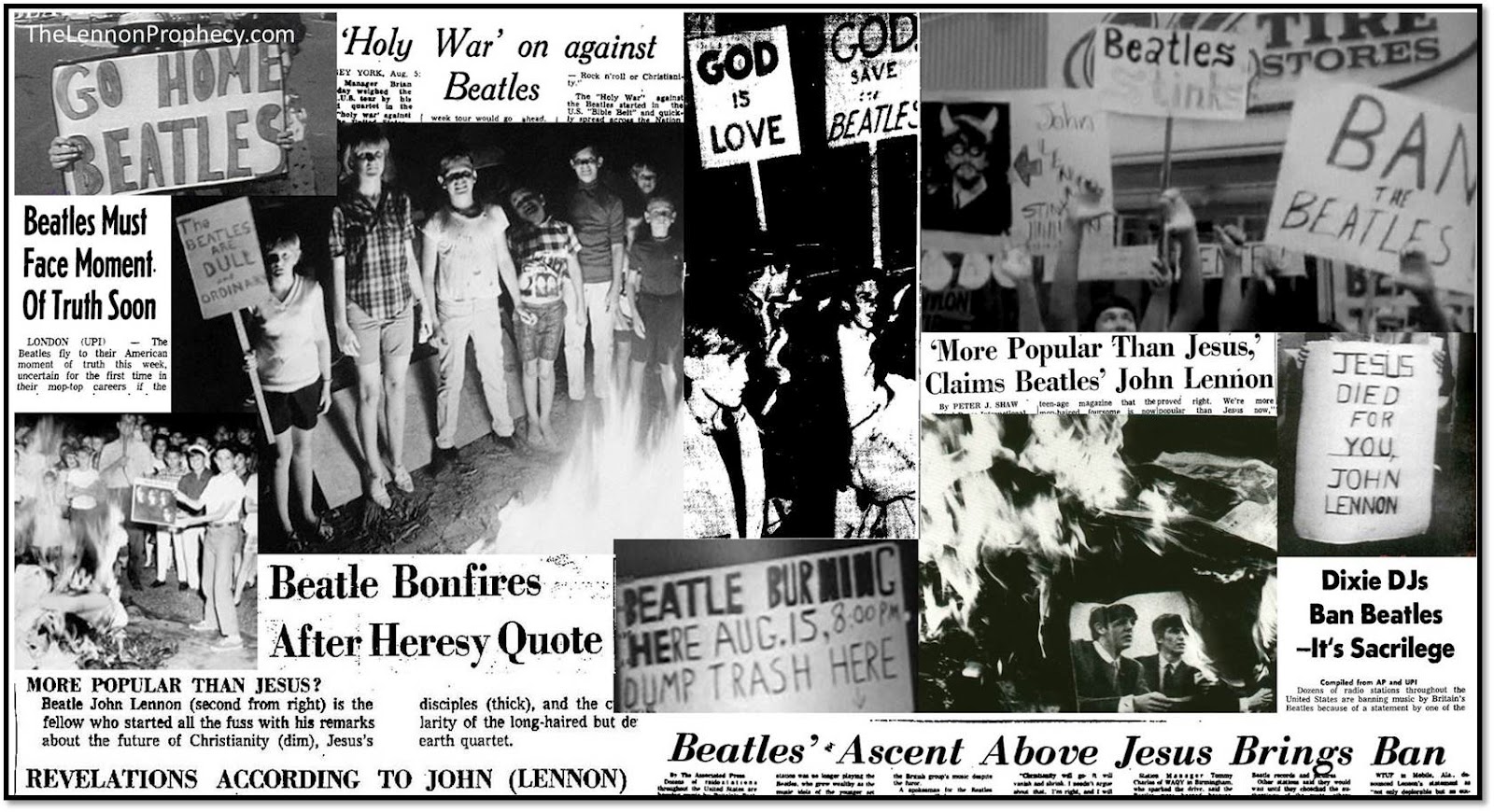
No doubt, many of you are aware of this, but in 1966, Lennon put his foot in the gluepot by making a statement published in a magazine wherein he said that The Beatles were “bigger than Jesus.”
Immediately, a frenzy erupted. Bonfires across the south torching Beatle records ensued.
(If you are reading this and you were part of any of those bonfires, would you please comment. I’d love to ask you about it.)

Image result for beatles bigger than jesus

However, if one looks at the context of the statement, an important question emerges.
Was Lennon saying, “The Beatles are better than Jesus”?
Or was he saying . . .
“The Beatles mean more to many young people than Jesus does.”
If the latter was Lennon’s intention, can this be doubted?
Just look at old Beatle concert clips where millions of young teen fans are screaming out of obsession. The screaming was so loud that The Beatles stopped touring because they couldn’t hear themselves.
Where these particular people more in love with Jesus than with the “Fab Four?”
If this was his meaning, it was an indictment on the poor state of Christianity more than anything else.

Image result for beatles bigger than jesus

Here are Lennon’s own words:
“It’s just an expression meaning the Beatles seem to me to have more influence over youth than Christ.  Now I wasn’t saying that was a good idea, ‘cos I’m one of Christ’s biggest fans. And if I can turn the focus on the Beatles on to Christ’s message, then that’s what we’re here to do.”
Nevertheless, that controversial question — which is open for interpretation — isn’t my reason for writing this post.
What the 1969 interview with Lennon reveals is that Lennon was genuinely interested in and fascinated by Jesus.
Certainly, Lennon had a bad taste in his mouth for organized Christianity when he was kicked out of church for giggling as a young boy. But Lennon said in this uncovered interview that his bad feelings were directed toward organized church, not at Jesus.
According to Lennon, it was “Christians” who made him not want to be a part of the church (as we know it). A common sentiment . . . even among many true followers of Jesus.
Lennon says,
“If the Beatles get on the side of Christ, which they always were, and let people know that, then maybe the churches won’t be full, but there’ll be a lot of Christians dancing in the dance halls. Whatever they celebrate, God and Christ, I don’t think it matters as long as they’re aware of Him and His message.”
Yes, that’s a statement by John Lennon.
In his book, The Gospel According to the Beatles, Steve Turner said that there was a time in Lennon’s life where he wanted to really know who Jesus was. (Turner’s book is published by a Christian publisher.)
According to Turner, Lennon would often retreat from his high-profile public life and became a regular watcher of Billy Graham, Oral Roberts and Pat Robertson via their television programs.
The Jesus Revival was going on in North America during the early 70s and Lennon’s good friend Bob Dylan became a Christian around that time.
In 1972, Lennon wrote to Oral Roberts, in which he apologized and further explained his statement about being “bigger” than God. Here’s an excerpt from a letter that Lennon wrote to Roberts:
“The point is this, I want happiness. I don’t want to keep on with drugs. Paul told me once, ‘You made fun of me for taking drugs, but you will regret it in the end.’ Explain to me what Christianity can do for me. Is it phoney? Can He love me? I want out of hell.”
In turn, Oral Roberts sent Lennon a response giving him a detailed explanation of God’s love for him.
In 1977, Lennon became deeply moved by NBC’s broadcast of the movie Jesus of Nazareth,  even telling his friends that he had become a Christian . . . “born again.”
A week after seeing the film, Lennon attended a church service on Easter Sunday with his wife Yoko Ono and their son Sean.
During the same year, Lennon penned several songs to reflect the experience (“Talking with Jesus” and “Amen”).
According to Turner, Lennon even called The 700 Club for prayer.
The change in John Lennon’s life disturbed his wife (Yoko) who rejected his new faith, and eventually, after months of isolation in Tokyo, John ended up abandoning his faith.
While there is no evidence that Lennon returned to his faith when he was murdered in 1980, no one can be sure what was happening in his heart before he pierced the veil of this life.
Lennon knew the way to salvation, so perhaps in his dying moments he turned his heart to the Way, the Truth, and the Life. (Lennon lived several minutes after he was shot in the back four times.)
Only eternity will tell.


sábado, 5 de noviembre de 2016

Paul McCartney shares Bonfire Night throwback picture


www.liverpoolecho.co.uk
Paul McCartney shares Bonfire Night throwback picture
Beatles legend sends out happy Bonfire Night wishes
BYDAN KAY
5 NOV 2016


There's nothing quite like Bonfire Night for making you feel like a big kid again as this picture shared by a certain Paul McCartney shows.

The Beatles legend posted a picture to his official Twitter account @PaulMcCartney of his younger self rescuing a rather jolly Guy Fawkes - replete with sunglasses and groovy white dancing boots - from a bonfire looking suspiciously like it might be on a Scottish island like Mill of Kintyre.

Macca commented "This guy got a last minute reprieve" before wishing everyone a Happy Bonfire Night - don't forget you can follow all the colour and excitement from Liverpool's massive River of Light celebration featuring planes firing pyrotechnics from their wing tips, drummers with sparks coming from their musical instruments and a 20-minutes display featuring around 10,000 fireworks below.


Paul McCartney, Scotland 1969.


viernes, 4 de noviembre de 2016

Eight Days A Week wins award

Image result for Critics’ Choice Documentary Awards beatles


wogew.blogspot.com
Eight Days A Week wins award
Posted by Roger Stormo
Friday, November 04, 2016


Winner of Best music documentary at the Critics' Choice Documentary Awards.

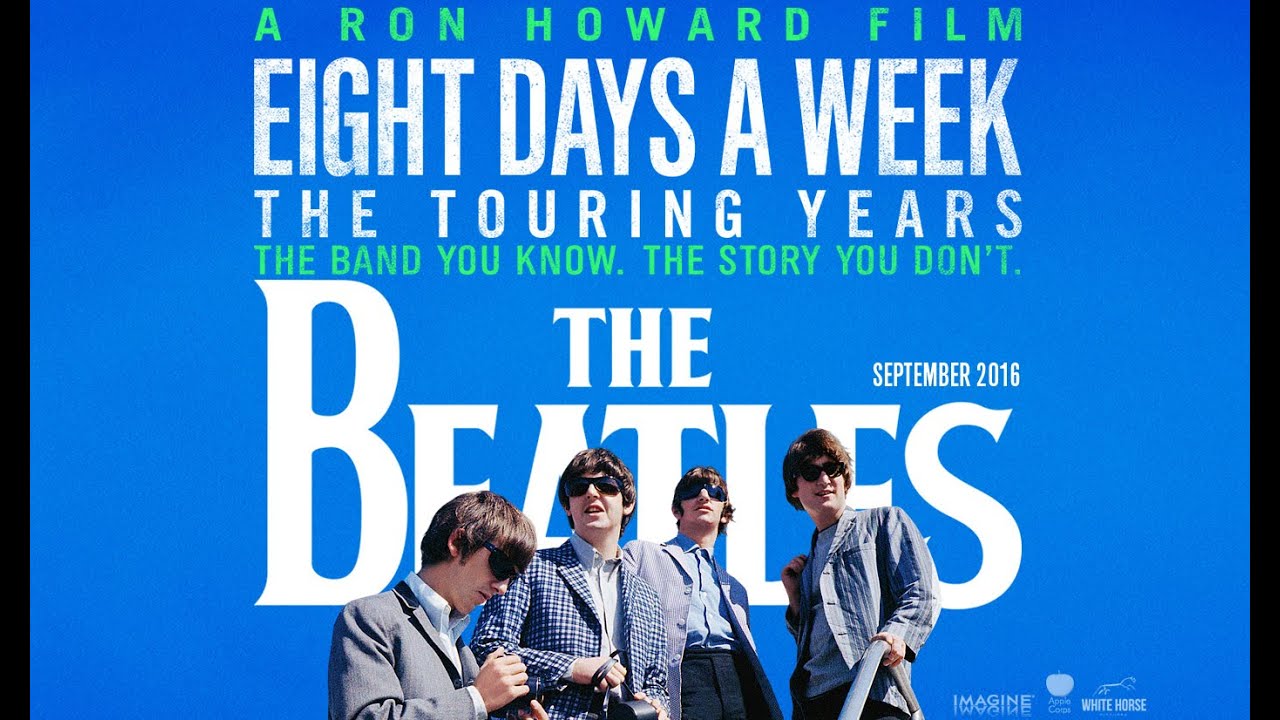
The Beatles: Eight Days a Week – The Touring Years was named best music documentary at the first annual Critics’ Choice Documentary Awards on Thursday night in New York.
The Critics’ Choice Documentary Awards were created to honour the finest achievements in documentary features and non-fiction television. The winners were determined by a committee of the Broadcast Film Critics Association (BFCA) and the Broadcast Television Journalists Association (BTJA) members with a background and expertise in the documentary field.
The Ron Howard film was also nominated for Best direction of a documentary feature, but the category was won by "O.J. Made in America", which took home four prizes at the event.

Meanwhile, The Beatles are busy promoting the home cinema release of the documentary, available on digital download, Blu-ray, DVD and 2 disc special edition from 18 November.


www.goldderby.com
Critics’ Choice Documentary Awards winners: Oscar frontrunners ‘O.J.: Made in America’ and ‘13th’ get big boosts
John Benutty
November 4 2016

Oscars-new-logo-and-statue

The Broadcast Film Critics Assn. announced the winners of the inaugural edition of the Critics’ Choice Documentary Awards on Thursday. “13th,” “O.J.: Made in America” and “Gleason” had led the nominations this year with five apiece, including the marquee category of Best Documentary Feature Film (Theatrical Premiere). “O.J.: Made in America” won that top prize, as well as three others: Best Director – Theatrical Feature for Ezra Edelman, Best Sports Documentary and Best Limited Documentary Series.

Ava DuVernay was named Best Director – TV/Streaming for her film “13th,” which also claimed Best Documentary – TV/Streaming and Best Political Documentary. Jack Kriegman and Elyse Steinberg’s film “Weiner,” another hot contender to make the Documentary Feature Oscar shortlist, took home the prize for Best First Documentary – Theatrical Feature, while “Gleason” went home empty-handed.

Below, the full list of winners, who were feted at a ceremony at BRIC in Brooklyn hosted by Penn Gillette.

Best Documentary – Theatrical Feature
“O.J.: Made in America”
Best Director – Theatrical Feature
Ezra Edelman (“O.J.: Made in America”)
Best Documentary – TV/Streaming
“13th”
Best Director – TV/Streaming
Ava DuVernay (“13th”)
Best First Documentary – Theatrical Feature
Jack Kriegman, Elyse Steinberg (“Weiner”)
Best First Documentary – TV/Streaming (Tie)
Jacob Bernstein, Nick Hooker (“Everything Is Copy”)
Deborah Esquenazi (“Southwest of Salem: The Story of the San Antonio Four”)
Best Political Documentary
“13th”
Best Sports Documentary
“O.J.: Made in America”
Best Music Documentary
“The Beatles: Eight Days a Week – The Touring Years”
Best Song in a Documentary
“I’m Still Here” from “Miss Sharon Jones!”
Best Limited Documentary Series
“O.J.: Made in America”
Best Ongoing Documentary Series
“30 for 30”
Most Innovative Documentary
“Tower”

Image result for Critics’ Choice Documentary Awards beatles


jueves, 3 de noviembre de 2016

The Paul McCartney-United Nations Concerts for the People of Kampuchea: Closing Rock & Roll Diplomacy’s First Decade

Image result for paul mccartney Concerts for the People of Kampuchea
Paul McCartney photo from inner gatefold photo spread of The Concerts For The People of Kampuchea

Image result for paul mccartney Concerts for the People of Kampuchea


www.huffingtonpost.com
The Paul McCartney-United Nations Concerts for the People of Kampuchea: Closing Rock & Roll Diplomacy’s First Decade
Hirad Abtahi
11/01/2016

In 1969, John Lennon and Yoko Ono initiated Rock & Roll Diplomacy which, as with most things John and Yoko, was avant-garde: Bed-Ins, Bagism and the Live Peace in Toronto 1969. As a premiere, they involved a politician, the then Canadian Prime Minister Pierre Trudeau. In 1971, George Harrison pursued that path, in his own way too: the New York Concert for Bangladesh was specifically linked to the Indian sub-continent. In what would become the first humanitarian Rock concert, Harrison involved UNICEF, a host of Rock stars, such as Eric Clapton, Bob Dylan and Ringo Starr, as well as Ravi Shankar and his Indian musicians. In 1979, Paul McCartney took Rock & Roll Diplomacy to its height. As with everything McCartney, the Concerts for the People of Kampuchea were a super-production, involving the United Nations Secretary General, UNHCR, UNICEF and a most diverse set of three generations of Rock musicians, in London.

2016-07-31-1469980604-2087718-LPCover.jpg
Photo: Unicef  . http://www.unicef.org/about/60years/1980/music_1981_01.html

1979 was an arguably eventful year. Each month sequenced political developments and cultural rainbows. In January, the United States established diplomatic relations with the People’s Republic of China. Vietnamese troops seized Phnom Penh, ending the Khmer Rouge’s Democratic Kampuchea. Two days later, the Music for UNICEF Concert, featuring, among others, ABBA, the Bee Gees, Donna Summer, Earth, Wind and Fire, and Rod Stewart, was held at the United Nations against hunger and to mark the beginning of the International Year of the Child. In February, Sid Vicious of the Sex Pistols died of overdose, and the world’s geostrategic landscape was durably altered in Iran, with the fall of the Imperial Government and the advent of the Islamic Republic, later in April. In March, at the wedding of Eric Clapton and Pattie Boyd, Clapton’s best friend and Boyd’s former husband, George Harrison, was best man: Flower Power was singing its swan song. In May, Margaret Thatcher became the United Kingdom’s first female Prime Minister, while Apocalypse Now received the Cannes Film Festival’s Palme d’Or. June was specifically eventful. While Super Tramp released the “Logical Song”, SALT II (Strategic Arms Limitation Talks) was signed, amid nuclear device testing by the US, USSR, and France. Muhammad Ali confirmed his third retirement, and the world witnessed the Second Oil Shock, as a result of the Iranian revolution. In July, as the Walkman hit retail shops, Saddam Hussein became Iraqi President, and the Sandinistas seized power in Nicaragua. In September, MUSE (Musicians United for Safe Energy) organized the No Nukes concerts against the use of nuclear energy. In October, Mother Teresa was awarded the Nobel Peace Prize, while the Guinness Book of World Records awarded the first ever Rhodium disc to Paul McCartney, as history’s bestselling song-writer and recording artist. November witnessed the storming of the US Embassy in Teheran, while Pink Floyd released The Wall. December ended the year with two major events. On the 25th, the USSR began a decade long invasion of Afghanistan while on 26-29 December, the Concerts for the People of Kampuchea took place in London.

2016-07-31-1469980773-5986578-Afgh.jpg
AP Photo: http://www.theatlantic.com/photo/2014/08/the-soviet-war-in-afghanistan-1979-1989/100786/

Organized by Paul McCartney and the United Nations, these concerts were in response to the 1975-79 Khmer Rouge’s reign, where three million persons perished in Cambodia. During the concerts, McCartney brought three generations of popular musicians together. The older generation included McCartney and the Wings, The Who and members of Procol Harum. The middle generation was represented by Queen and members of Led Zeppelin. Most notably, there was the new generation of mainly New Wavers and Punk Rockers, such as The Pretenders, Elvis Costello and The Attractions, Ian Dury and the Blockheads, The Clash, and The Specials. “Rockestra“ constituted the pinnacle, the award winning track for the Grammy’s first ever Best Rock Instrumental Performance, composed by McCartney for his 1979 Back to the Egg, and played by a super group composed of McCartney’s Wings, members of Attractions, Faces, Led Zeppelin, Pink Floyd, The Pretenders, Procol Harum, The Shadows, The Small Faces, and The Who.

2016-07-31-1469980826-1759773-tourprogram010.jpg
Photo: http://theworldsamess.blogspot.nl/2013/12/movie-of-week-concerts-for-people-of.html

To gather together such diverse profiles and genres required a unique person. One who was able to compose antithetic tunes such as “Eleanor Rigby“ and “Yellow Submarine“, “Helter Skelter“ and “Obladi Oblada“, Women’s Lib - “Lady Madonna“ - and Civil rights songs - “Blackbird“, or else play groovy bass lines, such as the one on “Come Together“. Introducing the psychedelic sounding tape loops, the Beatles’ multi-instrumentalist (some of the band’s songs were drummed by McCartney) was behind the revolutionary Sergeant Pepper concept, the bizarre avant-garde Magical Mystery Tour, the White Album concept, and the iconic Abbey Road LP cover. Sir Paul - as knighted in 1997 - the composer of children songs, movie soundtracks, Oratorio, Classical and Ballet music, one who, at 70, would win a best vocal Grammy for his number one Jazz LP Kisses from the Bottom. One whose post-Beatles collaborative work has topped the charts, be it with Michael Jackson, Stevie Wonder, Elvis Costello and, most recently, aged 72 with Nirvana’s surviving members, with whom he won a Grammy for best Rock song for their Grunge track “Cut Me Some Slack“; or else for his collaboration with Rihanna and Kanye West on the soul-pop number one hit “Fourfiveseconds“.

2016-07-31-1469980880-4091961-Fourfiveseconds.jpeg
Photo: http://www.rihannanow.com/

From 1969 to 1979, Lennon, Harrison and McCartney successfully conceptualized, put on track and applied Rock & Roll Diplomacy. At each stage, they heightened and widened both the political and artistic scope. At a time where social media did not exist, these were among the most efficient tools to boost the youth’s public awareness about peace, love, war crimes, crimes against humanity and genocide, however controversial the idea of using entertainment generated funds to alleviate human suffering may be. The McCartney-United Nations Concerts for the People of Kampuchea brought the Beatles’ Rock & Roll Diplomacy trilogy to a closure, laying the foundation for Band Aid, Live Aid, Earth Aid and other benefit Rock concerts. The rest is history. Speaking of which, in 2001 Cambodia and the United Nations created the Extraordinary Chambers in the Courts of Cambodia for the Prosecution of Crimes Committed during the Period of Democratic Kampuchea.

2016-07-31-1469980934-5750695-ECCC.jpg
Photo: https://www.eccc.gov.kh/en/media-center/photos/tag/courtroom-public-gallery?page=3

The views above are those of the author’s alone, in his personal capacity.


miércoles, 2 de noviembre de 2016

Capitol Records celebrates 75th anniversary: Releases

Image result for beatles capitol records
The Beatles  US Albums


wogew.blogspot.com
Capitol Records celebrates 75th anniversary: Releases
Posted by Roger Stormo
Wednesday, November 02, 2016 


As part of Capitol's 75th anniversary, "Meet The Beatles" will be available on vinyl again.

CAPITOL RECORDS TO LAUNCH YEAR-LONG 75TH ANNIVERSARY CELEBRATION IN NOVEMBER

Hollywood, CA – Capitol Records, one of the world’s preeminent music companies and the first record label established on the West Coast, will launch its 75thAnniversary Celebration in November with an extensive slate of music, film and literary projects that will pay tribute to Capitol artists spanning the past eight decades and shine a spotlight on their historic contributions to music and popular culture.

Capitol Music Group (CMG) Chairman & CEO Steve Barnett today announced three of the company’s planned endeavors: A year-long major vinyl reissue campaign – The Capitol Records 75th Anniversary Collection, 75 albums that illustrate the unparalleled artistry of Capitol Records throughout its history – launched in partnership with leading home furnishings destination Crate and Barrel; the publication of a deluxe photograph and essay book from TASCHEN, 75 Years Of Capitol Records, on December 15, and the development of a Capitol Records docu series being produced by Nigel Sinclair/Whitehorse Pictures (The Beatles: Eight Days A Week – The Touring Years, No Direction Home: Bob Dylan), with individual episodes to be directed by music luminaries and Capitol artists, past and present.


The year-long celebration will commence on Tuesday, November 15 when Capitol becomes the first record company to receive a star of recognition from the Hollywood Chamber of Commerce, which will be installed in front of the landmark Capitol Tower and adjacent to the internationally-renowned Hollywood Walk of Fame. At the star’s unveiling, the State the Los Angeles City Council will present Capitol with a resolution declaring November 15 Capitol Records Day in the city. Beginning that evening, the spire on top of the Capitol Tower that has always emitted “Hollywood” in Morse code will change to “Capitol 75,” and will continue to flash in that manner for the next 12 months.

The Capitol Records 75th Anniversary Collection – Vinyl Reissue Program

To select 75 albums that represent the best of Capitol Records from among literally thousands of works the company has released over the past 75 years, the label convened an advisory board of noted music journalists, authors and renowned creative figures to decide on the final list of albums that comprise The Capitol Records 75th Anniversary Collection. The result spans myriad Capitol eras and musical genres, and includes best sellers, influential works and lesser-known gems (see below). The reissue program begins this month, and titles will be available through music retailers throughout 2017.


Sgt Pepper's Lonely Hearts Club Band - USA edition


Crate and Barrel & American Airlines Partnerships

Leading home furnishings retailer Crate and Barrel has partnered with Capitol for its 75th Anniversary celebration to feature The Capitol Records 75th Anniversary Collection in stores nationwide. The collection can be found within The Listening Room, where consumers can find an exclusive collection of furniture, accessories and cutting edge audio equipment. American Airlines continues their partnership with Capitol Records and Universal Music Group to celebrate a Hollywood Icon and its contribution to music around the world. In 2017, American Airlines will continue their commitment to the industry by launching, “Fly to the Beat” – a Global Music platform, connecting consumers to their favorite musicians – including Capitol artists — and moments across five continents.

75 Years of Capitol Records – TASCHEN Release in December

To commemorate Capitol’s extraordinary history of recorded music, TASCHEN is publishing the official account of Capitol Records from its founding year of 1942 through to today. To be released December 15, 75 Years of Capitol Records follows the label’s evolution and the making of some of the greatest music of the 20th and 21st centuries. The book includes hundreds of images from Capitol’s extensive archives, as well as a foreword by Beck and essays by cultural historians and music and architecture critics. This photographic and musical history includes the label’s most commercially successful, creative and important artists whose work has defined Capitol Records, music and popular culture for the past eight decades. 75 Years of Capitol Records is also available at Capitol’s online store.

Capitol Records Docuseries – Produced by Nigel Sinclair / Whitehorse Pictures

This series – planned for release in the autumn of 2017 – will tap into the creative passions of Capitol’s artists, the hidden glories of the company’s extensive archives and the many stories that have taken place within the Capitol Tower throughout its 75-year as one of the world’s premiere music companies. But it will be more than just the illustrious history of such a storied label; it will also tell the story of America’s love  affair with popular music and an exploration of how Capitol’s
artists and their music have helped shaped social movements, transform our popular culture and helped define our lives. This docuseries will be produced by Nigel Sinclair’s Whitehorse Pictures, the creative team involved in numerous music-centered documentaries, including the award-winning No Direction Home: Bob Dylan and the just-released The Beatles: Eight Days A Week – The Touring Years. Each episode in this docuseries will be directed by a past or present-day Capitol artist or other cultural luminary who will bring a unique and knowledgeable perspective to the stories being conveyed.


Revolver - Capitol records edition.


The Capitol Records 75th Anniversary Collection  
(alphabetical by artist)

1: Ashford & Simpson: Solid, 1984
2: Beastie Boys: Paul’s Boutique, 1989
3: Beck: Morning Phase, 2014
4: Blind Melon: Blind Melon, 1992
5: Bob Seger: Night Moves, 1976
6: Bobbie Gentry: Ode To Billy Joe, 1967
7: Bobby Darin: You’re The Reason I’m Living, 1963
8: Bonnie Raitt: Nick of Time, 1989
9: Bonnie Raitt: Luck Of The Draw,1991
10: Buck Owens: Buck Owens, 1961
11: Cannonball Adderley: Mercy Mercy Mercy,1966
12: Coldplay: Parachutes, 2000
13: Crowded House: Crowded House, 1986
14: Dean Martin: Dino: Italian Love Songs, 1962
15: Duke Ellington: The Duke Plays Ellington, 1953
16: Foo Fighters:Foo Fighters, 1994
17: Frank Sinatra, In The Wee Small Hours, 1955
18: Frank Sinatra: Songs for Swingin’ Lovers! 1956
19: Frank Sinatra: Come Fly With Me, 1958
20: Frank Sinatra: Frank Sinatra Sings For Only The Lonely, 1958
21: Freddie Jackson: Rock Me Tonight, 1985
22: Gene Vincent & His Blue Caps: Bluejean Bop, 1956
23: George Clinton: Computer Games, 1982
24: George Harrison: All Things Must Pass, 1970
25: Glen Campbell: By the Time I Get to Phoenix, 1968
26: Grand Funk Railroad: We’re an American Band, 1973
27: Heart: Heart, 1985
28: James Taylor: James Taylor, 1968 (would be nice if they used the Apple label)
29: Joe South: Introspect, 1968
30: John Lennon: Imagine, 1971
31: Johnny Mercer: Accentuate the Positive, 1957
32: Judy Garland: Judy at Carnegie Hall, 1961
33: Katy Perry: Teenage Dream, 2010
34: Kingston Trio: Kingston Trio, 1958
35: Knack: Get The Knack, 1979
36: Les Paul and Mary Ford: Les and Mary, 1955
37: Linda Ronstadt: Heart Like a Wheel, 1974
38: Louie Prima: The Wildest, 1956
39: Maze Featuring Frankie Beverly: Maze Featuring Frankie Beverly, 1977
40: Mazzy Star: So Tonight That I Might See, 1993
41: MC Hammer: Please Hammer Don’t Hurt ‘Em, 1990
42: Megadeth: Peace Sells: 1986
43: Merle Haggard: Mama Tried, 1968
44: Miles Davis: Birth Of The Cool, 1957
45: Nancy Wilson: How Glad I Am, 1964
46: Nat King Cole: Unforgettable, 1953
47: Natalie Cole: Unpredictable, 1977
48: Neil Diamond: The Jazz Singer, 1980
49: Norah Jones: Come Away With Me, 2002
50: Peggy Lee: Is That All There Is, 1969
51: Pink Floyd: Dark Side of the Moon, 1973
52: Radiohead: OK Computer, 1997
53: Raspberries: Raspberries, 1972
54: Richard Thompson: Rumor & Sigh, 1991
55: Ringo Starr: Ringo, 1973
56: Robert Glaspar: Black Radio, 2012
57: Rosanne Cash: Black Cadillac, 2006
58: Sam Smith: In The Lonely Hour, 2014
59: Steve Miller Band: Fly Like an Eagle, 1976
60: Tavares: In The City, 1975
61: Tennessee Ernie Ford: Sixteen Tons, 1960
62: The Band: Music From Big Pink, 1968
63: The Band: The Band, 1969
64: The Beach Boys: Surfer Girl, 1963
65: The Beach Boys: Pet Sounds, 1966
66: The Beatles: Meet The Beatles, 1964
67: The Beatles: Revolver, 1966
68: The Beatles: Sgt. Pepper’s Lonely Hearts Club Band, 1967
69: The Beatles: The Beatles, 1968
70: The Beatles: Abbey Road, 1969
71: Tina Turner: Private Dancer,1984
72: Various: Oklahoma, 1955
73: Various: Funny Girl, 1968
74: Wanda Jackson: There’s a Party Goin’ On, 1961
75: Wings: Band on the Run, 1973

For Beatles fans, the big news here is that "Meet The Beatles" gets a re-release on vinyl. It was deleted on vinyl when The Beatles' catalogue was streamlined in 1987 to consist of just the UK albums, but has been brought back as a CD on two occasions. But will it be in "Duophonic" stereo this time? ;-) We have no information about whether "Sgt Pepper's Lonely Hearts Club Band" will feature the yellow line on the top of the cover or whether or not it will contain the dog whistle and the gibberish at the end of the record, or if "Revolver" will be missing three songs. It probably will, though.


Paul's New Composition Features On Ethel & Ernest Soundtrack Album

www.PaulMcCartney.com

OCT
28
2016

Paul's New Composition Features On Ethel & Ernest Soundtrack Album

Paul's New Composition Features On Ethel & Ernest Soundtrack Album
FEATURING AN ORIGINAL SCORE FROM CARL DAVIS, CLASSIC TRACKS SPANNING FIVE DECADES AND A BRAND NEW COMPOSITION FROM PAUL McCARTNEY
RELEASED OCTOBER 28th
Decca Records is set to release a special CD and digital version of the soundtrack for the eagerly anticipated feature film Ethel & Ernest, an animated adaptation of Raymond Briggs’ classic graphic novel and tribute to his parents.  Available to buy and download from 28th October, the CD features the original score, composed by internationally renowned composer and conductor Carl Davis, alongside tracks from the 1920s to the 1960s including music from Gracie Fields, Charles Penrose, Juliette Greco, The Shadows and Dave Berry and an original song written and performed by Paul McCartney.
Based on the 1998 book by the acclaimed British author and illustrator, the beautifully hand-drawn film spans 40 years and tells the true story of Raymond’s parents – Ethel and Ernest - two ordinary Londoners living through a period of extraordinary events and immense social change; from their first chance meeting in 1928, through the birth of their son Raymond in 1934, to their deaths, within months of each other, in 1971. A team of top British acting talent make up the voice cast including Jim Broadbent, Brenda Blethyn, Luke Treadaway, Virginia McKenna, Pam Ferris, June Brown, Roger Allam and Simon Day.
Ethel & Ernest is Carl Davis’s first score for an animated feature and is performed by the Chamber Orchestra of London with a piano solo by Huw Watkins. Original recordings of songs and tunes from the 1920s through to the 1970s accompany the score, including ‘Apple Blossom Time’ by Victor Silvester, ‘The Deepest Shelter in Town’ by Florence Desmond, ‘We’ll Meet Again’ by Jack Hylton, ‘Singing in the Bathtub’ by Gracie Fields, ‘Sous Le Ciel de Paris’ by Juliette Greco, ‘Foot Tapper’ by the Shadows and ‘Little Things’ by Dave Berry.
In addition, two tracks in the film come from a very famous musical family. Back in the 1920s Paul's father, James McCartney, wrote a tune called 'Walking in the Park with Eloise' when he was leader of the Jim Mac's Jazz band, a version of which was recorded by Paul as The Country Hams in 1974. This has been re-arranged specially for the film by Carl Davis and performed by the Chamber Orchestra of London. In addition  Paul himself has written and performed a brand new song for the film -'In The Blink Of An Eye'.
“I am proud to be a member of the team that translated Raymond Briggs’ profound book into an elegant and matchless film,” says Carl Davis. “It is a superb achievement.”
“Ethel & Ernest spans 40 years of the 20th century, from 1928 to 1971. So when it came to weaving contemporary songs and tunes into the story we were able to choose some of the finest popular music ever recorded,” says director Roger Mainwood. “You will hear the big band sounds of the 1930s, popular romantic ballads from the war years, comic songs in the music hall tradition, right through to the pop culture of the 1960s. There are familiar classics in the mix but we also wanted audiences to be surprised by some less well known tracks.”
Produced by Lupus Films in association with Ethel & Ernest Productions, Melusine Productions and Cloth Cat Animation and supported by the BFI, BBC, Film Fund Luxembourg, Ffilm Cymru Wales and the Welsh Government, Ethel & Ernest is set for theatrical release on 28th October 2016. The BBC will broadcast the film on TV in the UK later in the year.

Track listing:
 

Carl Davis – Opening Titles
Carl Davis – London 1928
Jim Broadbent/Brenda Blethyn (Film Dialogue) – Ethel and Ernest introduce themselves
Carl Davis – Walking in the Park with Eloise
Carl Davis – We’re Going To Be Married
Bert Lown & His Orchestra & Elmer Feldkamp – Now You’re In My Arms
Al Bowlly with Lew Stone & His Band – What a Little Moonlight Can Do
Carl Davis – Homemaking Montage
Ambrose & His Orchestra/Denny Dennis – Blue Skies Are Around The Corner
Carl Davis – The Baby
Carl Davis – Housekeeping
Joe Daniels & His Hotshots – Tea for Two
Carl Davis – Paddington
Florence Desmond – The Deepest Shelter in Town
Ivor Kirchin & His Band – Underneath The Spreading Chestnut Tree
Jack Hylton – We’ll Meet Again
Carl Davis – Blitzkrieg
Carl Davis – Dorset - A Village
Gracie Fields – Singing in the Bathtub
Gracie Fields – A Perfect Day
City of Prague Philharmonic Orchestra – Stagecoach Theme
Carl Davis – Grammar School
Carl Davis – A Clever Boy
Charles Jolly Penrose – The Laughing Policeman
Tommy Reilly & Jack Warner – An Ordinary Copper
Charles Williams – The Young Ballerina
Juliette Greco – Sous Le Ciel de Paris
The Shadows – Foot Tapper
Dave Beryy – Little Things
Rupert’s People – Reflections of Charlie Brown
Carl Davis – Tea for Two Reprise
Carl Davis – She’s Gone
Carl Davis – Pear Tree
Paul McCartney – In The Blink Of An Eye